Both give you a real fire — but they look, heat and install differently. Here’s how to choose between an inset and a freestanding log burner.
By The Bella Bespoke team · HETAS registered installers, Westcliff-on-Sea
Choose a freestanding stove if you want fast, room-filling heat and a traditional or statement look; choose an inset stove if you want a clean, built-in finish that saves space. Both are real wood burners — the difference is how they sit in the room and how they deliver heat.
What is a freestanding stove?
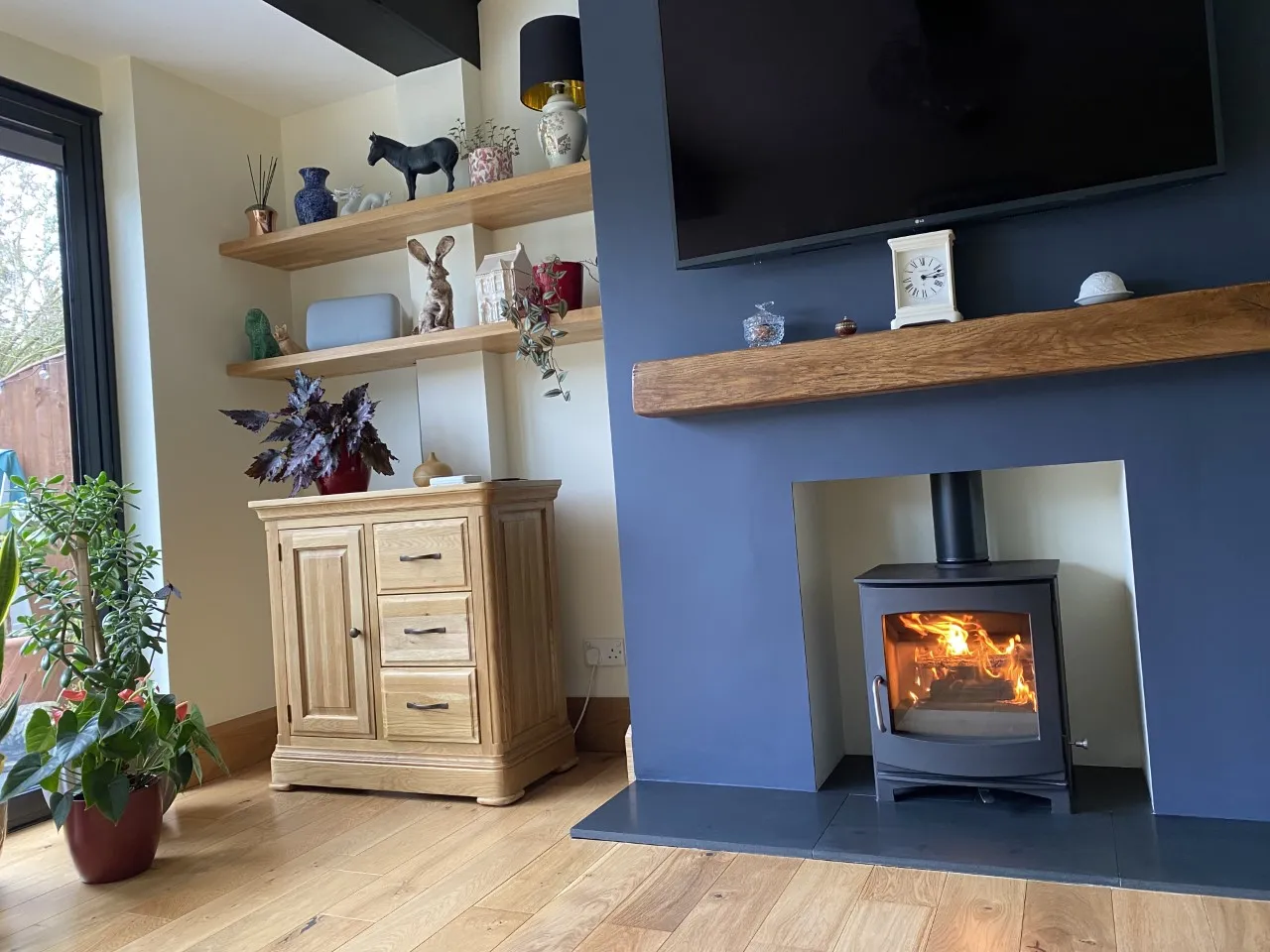
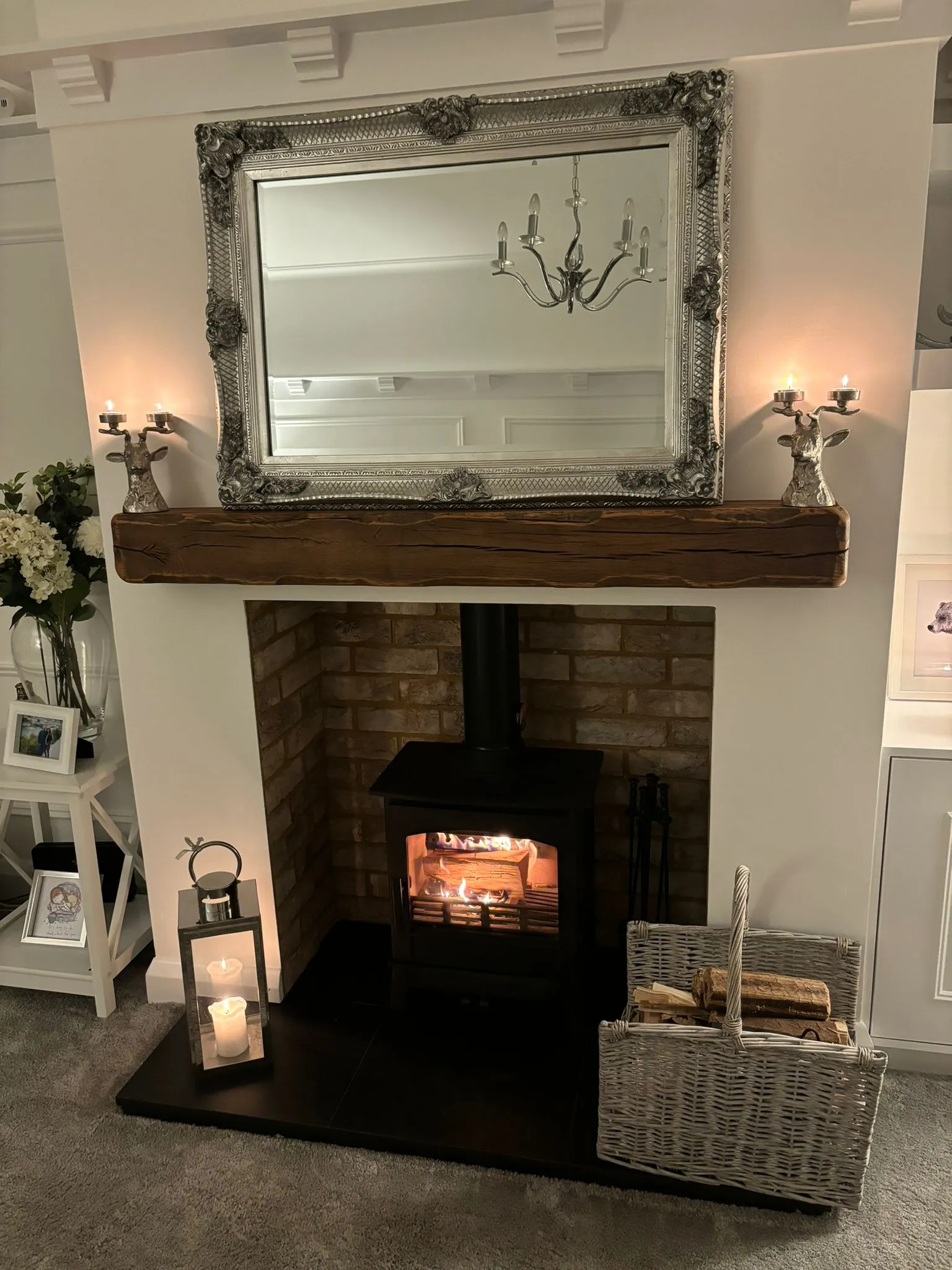
A freestanding stove stands on a hearth, either inside a fireplace opening or out in the room with its flue exposed. Because its whole body is in contact with the room’s air, it radiates heat from every side.
Best for: heating a room quickly, traditional fireplaces, open-plan spaces and statement installations.
What is an inset stove?
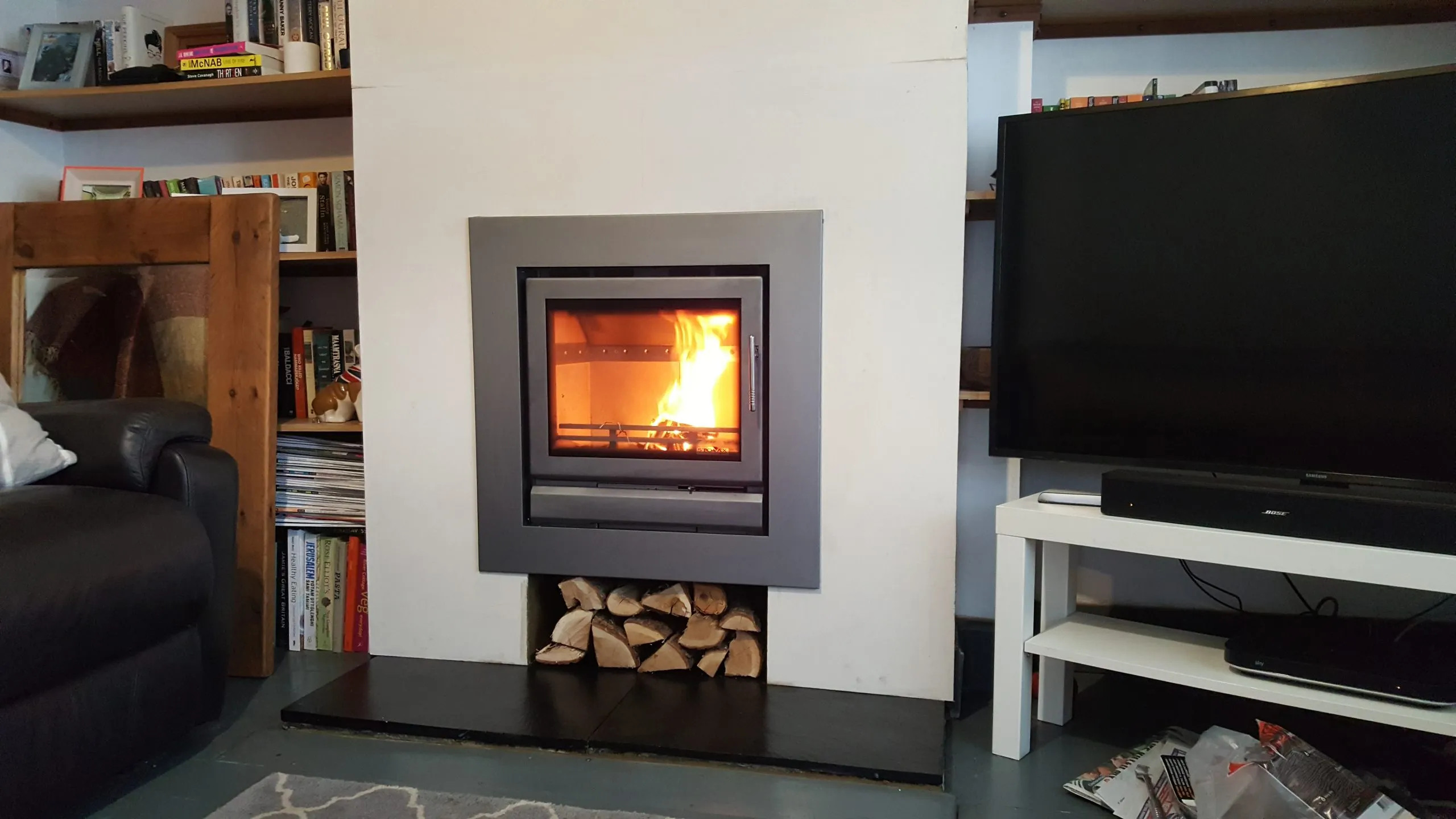
An inset (or cassette) stove is built into the wall, so its front sits flush or nearly flush. You see the fire through a framed window with little or no stove body on show.
Best for: contemporary interiors, media walls (like the one pictured), and smaller rooms where floor space matters.
How do they compare?
| Freestanding | Inset | |
|---|---|---|
| Look | Traditional or statement | Clean, built-in |
| Heat | Radiant, fast | Often convection-assisted |
| Floor space | Needs a hearth in front | Minimal |
| Building work | Often simpler | Needs a precise opening |
What about fitting a TV above?
A media wall with an inset stove is a popular look, but heat rising from any stove can damage a TV. Follow both manufacturers’ instructions and allow proper clearances — a shelf or mantel above the stove helps deflect heat. See our fireplace FAQs.
Which is right for my home?
Start with the heat output you need (how to size a stove), then think about how you want the room to look. We often combine an inset stove with a brick slip chamber for warmth and texture.
Not sure which suits your space? Book a free design consultation and we’ll show you options in your own home.
Frequently asked questions
They can feel less immediate than a freestanding stove because less of the stove’s body is exposed to the room. Many inset stoves use convection to push warm air out, and a well-chosen inset can heat a room very effectively.
Often, if the opening is the right size and the chimney is suitable. Sometimes the opening needs altering, or a false chimney breast or media wall is built to house the stove.
A freestanding stove in an existing fireplace with a sound chimney is often simpler. Inset stoves need more precise building work around them. Both must meet the Building Regulations.
Want expert advice for your home?
Book a free, no-obligation survey with our HETAS registered team.
- #log burners
- #buying advice
- #inset stoves
- #design